
Infrastructure and Geopolitics
My work on infrastructure and US global power focuses on how the private and public sectors have worked in tandem throughout history to project US influence overseas. The work involves both specific case studies on US maritime power as well as more expansive arguments about how this power has evolved in the 20th and 21st centuries.
Shipbuilding:
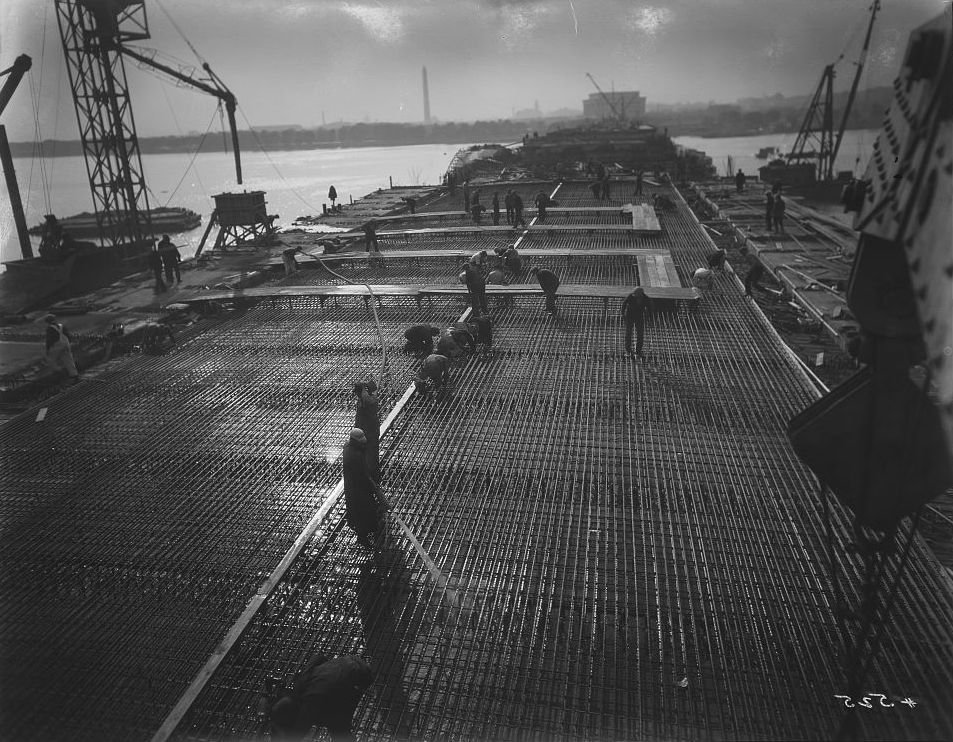
“The Invisible Hand Won’t Rebuild US Shipyards” in Foreign Policy explains why the US government must lead the maritime turnaround to reinvigorate the US
Liberty Yards: The Case for Public Shipbuilding, a whitepaper published by the Vanderbilt Policy Accelerator, presents a plan for government-led maritime revitalization, including establishing four publicly-owned “Liberty Yards.”
Geopolitics:
"Infrastructure Is Remaking Geopolitics" in Foreign Affairs argues that infrastructure is now the organizing principle of 21st-century geopolitics. Nations compete to control the interconnected networks that deliver services essential to societies' operation, but traditional state-centric geopolitics do not account for the complexity of a world shaped by corporations, standards bodies, and other non-state actors.
“Infrastructure Power” in Engelsberg Ideas explains why the major forces driving 21st-century change will come not just from the actions of states and corporations but from the intricate lattice of infrastructure networks that connects us all.
The Infrastructural Turn
in Historical Scholarship
ABSTRACT || This essay argues that historical scholarship has taken an infrastructural turn in recent years. “Infrastructure” serves not just as a popular keyword in monographs and journal articles; it reflects a new approach to research that has permeated the field. An infrastructural approach offers a frame- work for historians to understand the power of traditional structures like the state and the economy in ways that accommodate transnational interconnections, technology, and the stubborn materiality of the phenomena under study. This essay analyzes why scholars have embraced the term recently, and it outlines the basic components of an infrastructural orientation. It concludes by considering the blind spots of an infrastructural approach, as well as directions for future scholarship.
Published in Modern American History, March 2023